Essay · Human behaviour
The Moment My Autopilot Slipped
A date written differently, a habit interrupted, and the tiny crack that proves our patterns are not permanent.
If you have ever wondered why you can’t seem to change your habits, or why you keep procrastinating even when you want to start, this might surprise you.
Change doesn’t begin with discipline. It begins with something much smaller—and far easier to miss.
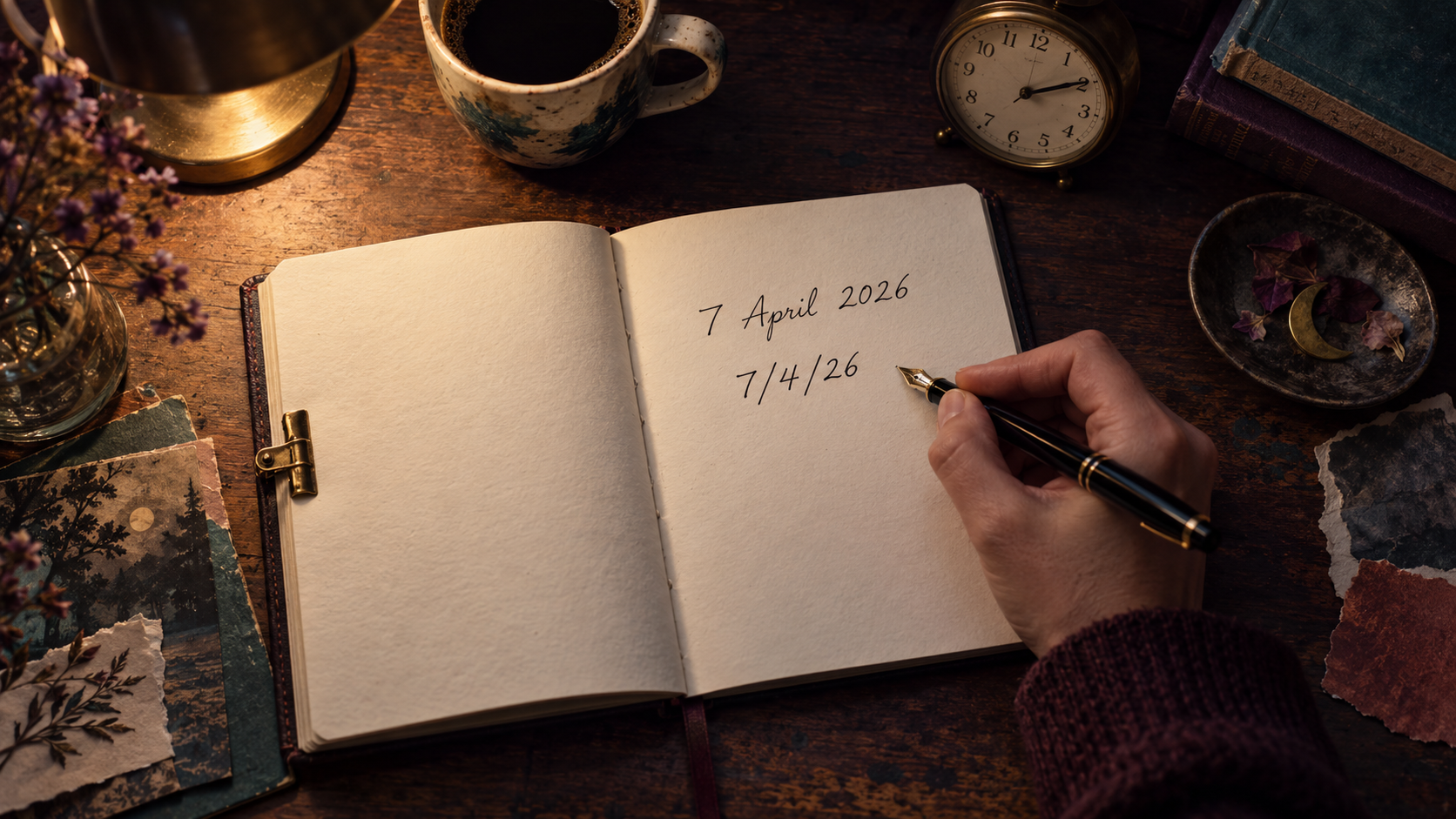
I’ve written the date the same way for years when I am journalling.
7 April 20267/4/26
Neat, proper and, if you wish, predictable. The kind of unremarkable habit that repeats itself without ever asking for attention. It’s not something I think about. It’s just something I do, like brushing my teeth or switching off the lights before bed. It belongs in that little box of behaviours that feel so ordinary, they almost disappear.
Until they don’t.
The other night, I sat down to journal as usual. Same notebook. Same pen. As always, it was in the small hours of the night. Nothing out of the ordinary. And without thinking, I wrote the date in its shorter format.
I paused and stared. Not because it was wrong, but because it was different. It still pointed to the same date, but something about it felt unfamiliar. It didn’t sit quite right on the page. It didn’t feel like me and, for lack of a better description, it looked weird.
That caught my attention, and I said out loud—to no one in particular—“Now why would I do that?”
It made me realise just how much of what we do each day isn’t conscious at all. We like to believe we are making decisions, choosing our actions and directing our lives deliberately. But the truth is that much of our behaviour runs on well-rehearsed scripts built over time: tiny patterns that repeat themselves so consistently, they become part of our routine and our identity.
This is how I write the date.
This is how I make my coffee.
This is how I answer my phone. (I still answer it the same way I did in 1996.)
This is how I cope.
This is how I avoid …
We don’t question these patterns because they feel natural, familiar and even safe. They create continuity—a feeling that we know who we are and how we operate in the world.
So, when one of those patterns shifts, even slightly, it stands out.
That small moment, pen in hand and looking at the date written differently, reminded me that my autopilot had slipped. Just for a second—long enough for something else to take over. This seemingly minor event stopped me so completely that I couldn’t even remember what I had been about to write in my journal.
I immediately did some research, because apparently that’s what we do when we turn wonky.
Maybe I was tired. Maybe I was distracted. Or perhaps, somewhere in the background, my brain simply tried something different. No big announcement. No conscious decision on my part to change the date format. Just a quiet adjustment.
What my research suggested can be summarised like this:
Our brains are constantly adjusting. Not in obvious, dramatic ways, but through subtle shifts. They test alternatives, look for shortcuts and introduce variation. Most of the time, these changes are so minor that we don’t even notice them. But every now and then, something breaks through into our awareness—and when that happens, it feels significant.
Not because the action itself matters, but because it reveals something deeper: we are not as fixed as we think we are.
We tend to see ourselves as consistent beings. We tell ourselves stories about who we are:
I’m someone who always does things properly.
I’m someone who struggles to start.
I’m someone who needs pressure to get going.
My favourite: I perform better under pressure. (What a lie!)
I’m someone who finishes … or doesn’t.
These identities feel solid, reliable and almost permanent. But they’re built on patterns. And patterns, as it turns out, are not as rigid as they appear.
That small shift in how I wrote the date was a tiny crack in an otherwise stable pattern—a reminder that even ingrained behaviours can change, sometimes without effort, planning or permission.
And this is where it gets interesting, because the exact same thing happens with the things we avoid.
Procrastination doesn’t feel like a choice most of the time. It feels like a default setting. You tell yourself you’ll start tomorrow, and somehow tomorrow keeps moving. Days pass. Weeks pass. The task remains untouched, quietly growing heavier in your mind.
And then, one day, something shifts.
You sit down. You start.
Not perfectly, or even brilliantly. But you begin. Afterwards comes that familiar thought: “Why didn’t I do this sooner?”
I can’t even begin to count how many times I have asked myself that question.
But maybe that’s the wrong question. Perhaps we should be asking:
What was different about that moment?
Because, just like the date on the page, something in the pattern changed. Not dramatically—just enough to let a different behaviour through.
So, guess what? Contrary to popular belief, you and I are not stuck. We are patterned. We are creatures of habit, and patterns feel permanent until they break.
The problem is that we often dismiss these small breaks. We brush them off as random, insignificant and not worth our attention. When I do something differently, I usually raise an eyebrow and move on. I don’t pause long enough to recognise what it might represent: flexibility, possibility and proof.
Proof that we are capable of doing things differently, even when we don’t feel ready, even when we don’t have a plan, even when nothing around us has changed—and even while we keep telling ourselves, “This is the way I always do things.”
That moment with the date wasn’t important because of how it looked on the page. It mattered because it revealed something I could easily have missed: change doesn’t always arrive through effort, discipline and grand decisions.
Sometimes it slips in quietly, almost unnoticed. If you’re not paying attention, you’ll miss it.
So the next time you catch yourself doing something differently, even something small, don’t rush past it.
Pause. Notice it. Sit with it for a moment, and then ask yourself a better question:
What else can I do differently today?
Not everything. Just one thing.
Because change doesn’t need a dramatic beginning. It doesn’t need a plan, a perfect mindset or a Monday morning.
Sometimes it starts with something as simple as a date written slightly differently—and the willingness to notice that it happened at all. It starts with a different choice. A different response.
And the moment you notice it … that’s the moment everything becomes possible.